Stress management & resilience
Week 4
Breath, body, mind continued…
This lesson marks week 4 of your stress management program. In this week’s lesson you will re-assess your heart sensing practice and continue learning about the connection between your breath, body, and mind using coherence breathing to improve calm, relaxation, and recovery.
I leave you with the same two questions to from last week’s lesson:
1. What advantage do we gain from having both conscious and unconscious control over our breathing?
2. how might breathing influence our bodies and minds?


1
track your recovery
Please click the button below and follow the instructions. Rate each category as they apply to you over the last 1-3 days. As guidance, a score of ‘7’ is positive/ more “good”, ‘1’ is negative/ more “bad”, and ‘5’ is average. You will receive an email with your Recovery Score. Your coach will track your progress and use this to guide your weekly coaching calls.
Keep this window/tab open. Return here and scroll below to continue your lesson— Breathing & Stress!
In this week’s lesson you will continue to explore the connection between your breath, body, and mind.
First, please complete your weekly and/or daily self-check-in below BEFORE moving to the next lesson. Remember, the benefit of this check-in is to strengthen your awareness around your current recovery in a given moment, and help your coach better understand how your recovery is changing week over week.
2
heart sensing
Begin with re-assessing your Heart Sensing practice. Remember, the purpose of this practice is two-fold:
1. To assess the strength of your mind-body connection. Specifically, how accurate you are at counting individual heart beats.
2. To observe the connection between the sensation of heart sensing and the thoughts that arise during this practice.
Follow the video below and record your results in the form following.
3
Resonance & Coherence breathing
RESONANCE | “A speicifc breathing pace (~5.5 breaths/minute) proposed to lead to synchronicity of respiration with cardiovascular functions, which may lead to improvement in stress, anxiety and depressive sympotoms”
— Fincham, GW et al (2023)
coherence | “an experiential outcome to slow paced breathing that can support emotinal regulation & stress resilience.”
— Martin McPhilimey, Founder School of Breath Science/MSc Clinical Respiratory & Sleep Science
Resonance & Coherence Defined
1
guided coherence breathing
2
Guided resonance breathing
3
4
re-assess air hunger and stress tolerance
Connecting back to last week’s lesson, Air Hunger is similar to appetite hunger in that it is sensory information from your “internal” world. This internal awareness is called interoception. This specific information provides both physiological and psychological feedback.
It is the combined body & mind response to air hunger that makes assessing and improving your “air hunger tolerance” potentially beneficial for improving anxiety, burnout, breathlessness and exercise performance.
Now, let’s check-in and see if your slow paced breathing practice from Resonance & Coherence Breathing has any influence on your air hunger response.
assessing air hunger
Please follow the videos below and record your results!
5
Choose Your Breath Practice
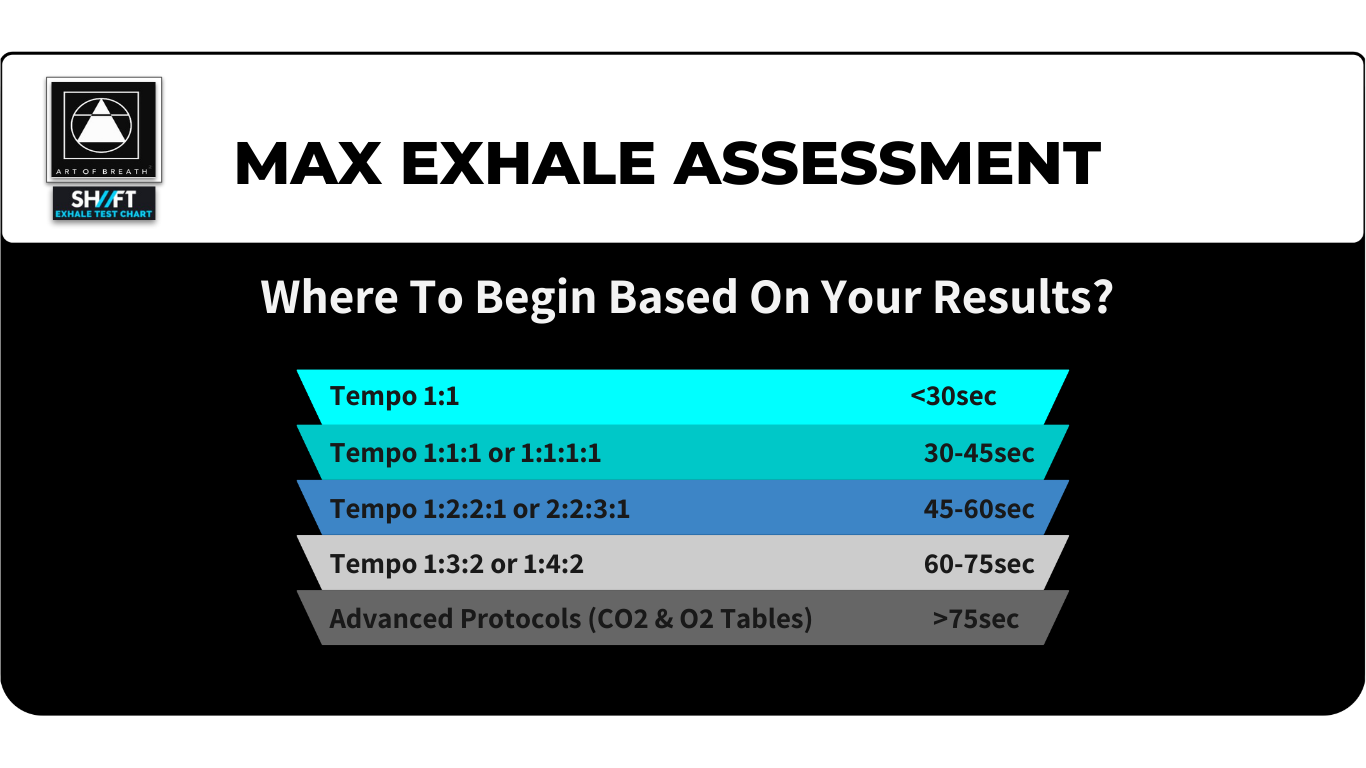
Continue your practice from last week. Use the ‘Results’ table below to choose a breath practice based on your Max Exhale Assessment time OR use either Resonance or Coherence Breathing. Record your practice in the form below.